
Amangeldi Zhanelya Zhandoskyzy
4th-year student, Kazakh Ablai Khan University of International Relations and World Languages, Almaty, Kazakhstan
Scientific supervisor: Sembaeva Zhanagul Kostanaykyzy
Kazakh Ablai Khan University of International Relations and World Languages, Almaty, Kazakhstan
Abstract. Artificial intelligence (AI) has been a leading catalyst for technological evolution in recent decades, shaping the vector of development of modern society. Its active penetration into various sectors, from healthcare to industry— inevitably affected the educational space, which is traditionally characterized by slow but inevitable adaptation. The emergence of powerful language models, intelligent learning systems, adaptive platforms, and automated data analysis tools is gradually changing both teaching methods and the format of interaction between all participants in the process.
The modern educational system is facing a number of serious challenges: the need to cope with the growing number of students, the acute lack of a personalized approach, the need for rapid processing of large amounts of data, as well as the transition to more flexible forms of education. In this context, AI is seen not just as an assistive technology, but as a key factor capable of initiating deep structural transformations. Intelligent systems have the ability to analyze students’ individual educational routes in detail, adjust the complexity of materials, automate the assessment procedure, and provide prompt feedback. Consequently, AI helps to increase the effectiveness of teaching, reduce the administrative burden on teachers and strengthen individualized approaches.
At the same time, the widespread use of AI is becoming the subject of intense debate. A number of questions arise regarding the preservation of academic integrity, assessing the impact of technology on the cognitive development of students, ensuring equal access to digital tools, as well as the readiness of teaching staff to work fully in the context of digital transformation. Researchers unanimously emphasize that the high speed of AI implementation outstrips the development of the necessary regulatory, ethical and methodological standards, which makes a comprehensive analysis of its advantages and disadvantages especially timely and relevant.
Key words: Artificial intelligence (AI), technological evolution, educational system, digital transformation, language models, intelligent learning systems, adaptive platforms
INTRODUCTION
AI is becoming particularly important in the process of teaching foreign languages, where regular practical communication, repetition rate, and timely corrective intervention are critically important. Intelligent assistants, chatbots, and advanced speech recognition systems open up fundamentally new opportunities for the targeted development of conversational skills, effectively reducing the language barrier and creating a safe training environment. This feature is especially valuable for students studying English as a Foreign Language (EFL), who often face a lack of real communication practice within the framework of traditional curricula.
This study aims at a comprehensive analysis of the positive aspects and limitations of the use of AI in the educational environment, as well as an empirical assessment of the perception of technology by students and teachers themselves. To do this, a survey was conducted among participants in the educational process, aimed at assessing the effectiveness of AI, its practical benefits, potential risks and existing usage practices. Close attention is paid to the study of the extent to which AI contributes to the progress in the development of conversational skills in EFL classes, since this area is one of the most promising areas of application of modern language models.
Thus, the main objective of the article is to comprehensively examine the impact of artificial intelligence on the education system, including an analysis of its pedagogical potential, existing limitations and perceptions of key participants in the educational process. This, in turn, will allow us to form a more objective and balanced understanding of the possibilities for successful and responsible implementation of AI in educational practice.
Мethod
Study Participants
The study involved 82 people representing key categories of subjects of the educational process. The sample was formed from three main groups:
- Undergraduate Students: Students in humanitarian and pedagogical fields, including «Foreign languages», «Pedagogical Education» and «Linguistics». The age of this subgroup was in the range of 18-23 years.
- EFL Teachers: Teachers specializing in English as a foreign language, with at least two years of university experience and proven experience in integrating AI technologies into their practice. The age of the teachers ranged from 26 to 54 years.
- Teachers of non-speech disciplines: Specialists from the fields of mathematics, computer science, social sciences and pedagogy. Their inclusion in the sample provided a broader, interdisciplinary perspective on the application of AI.
The participants were recruited using convenient sampling (convenience sampling) with mandatory voluntary informed consent, which corresponds to the established ethical standards of educational research.
2.2. Research Tools (Instrument)
The main data collection tool was the structured Survey, consisting of 18 questions divided into four thematic blocks:
- Attitudes towards AI in education: 6 questions using the five-point Likert scale (1 – complete disagreement; 5 – complete agreement).
- Experience and frequency of using AI: 4 closed-ended questions (with a choice of one or more possible answers).
- Perception of the advantages and disadvantages of AI: 4 open-ended questions to identify subjective assessments.
- The use of AI in learning foreign languages: 4 questions, including a direct assessment of the effectiveness of AI for the development of conversational skills.
The formulations of the questions were carefully worked out in order to eliminate suggestive constructions and minimize the risk of receiving socially desirable answers.
Reliability Check:
The internal consistency of the Likert scale was assessed using the Cronbach’s alpha coefficient. The resulting value of alpha = 0.81 demonstrates a good level of reliability and consistency of the instrument, confirming its suitability for further statistical analysis.
2.3. Procedure for Data Collection and Analysis
The research was carried out in online format on the secure Google Forms platform. Participants received access to the questionnaire via individual links.
Stages of the event:
- Information and Consent: The respondents were provided with complete information about the research objectives, voluntary conditions, and confidentiality principles.
- Filling in: The average time spent completing the questionnaire ranged from 7 to 10 minutes.
- Data Processing: Responses were automatically exported, after which the completeness of the data was checked. The missing values (less than 2%) were replaced by the group average method.
Statistical Analysis:
The following methods were used for quantitative data:
Descriptive statistics
Comparison of independent subgroups
Correlation analysis to assess the relationship between the frequency of AI use and the subjective level of perception of its benefits.
Qualitative Analysis:
The answers to the open questions were subjected to content analysis. The analysis identified key recurring categories (themes) reflecting the central aspects of AI perception.:
Personalization.
Motivation.
Threats to academic integrity.
Decreased critical thinking.
The effectiveness of AI in language learning.
2.4. Ethical Considerations
The research strictly followed the principles of academic ethics and confidentiality requirements. The following conditions were met:
Obtaining electronic informed consent from all participants.
Anonymity of data collection (excluding the collection of personal identification information such as names and email addresses).
The use of all responses received solely for scientific and educational purposes.
Guaranteeing the right of participants to refuse further participation at any stage.
All ethical procedures were previously coordinated with the educational and scientific committee of the relevant faculty.
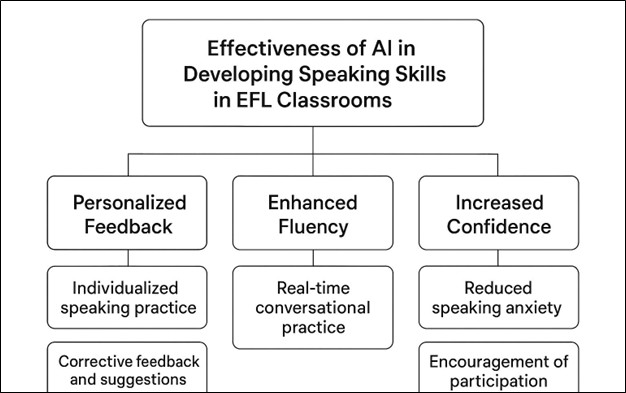
Figure 1 – Effectiveness of AI on developing Speaking skills in EFL Classrooms
Effectiveness of AI in Developing Speaking Skills in EFL Classrooms
The development of Speaking Skills in the process of learning English as a foreign language (EFL) is traditionally considered one of the most serious methodological problems. Most students face difficulties due to insufficient language practice, a strong fear of making mistakes, low communicative confidence, and objective time constraints inherent in classroom activities. The integration of artificial intelligence (AI) technologies is fundamentally changing approaches to the formation of oral skills, creating optimal conditions for regular, flexible and deeply personalized training.
AI tools such as chatbots, interactive assistants, and automated speech assessment systems (for example, platforms similar to Duolingo English Test AI-scoring, iTalki AI Tutor, Speak, and ELSA Speak) provide students with the opportunity to instantly engage in dialogue, receive detailed corrective feedback, and practice speech in a safe, supportive environment. Unlike standard classes, where speaking opportunities are strictly limited, AI allows students to practice an arbitrary number of times, eliminating the fear of negative evaluation.
- An increase in the Frequency and Regularity of Oral speech Practice One of the key predictors of successful fluency development is the volume and regularity of speech practice. According to the survey, $72% of students indicated that AI allowed them to increase the frequency of oral practice compared to previous experiences, and $65% of respondents confirmed that interacting with AI effectively helps them overcome the language barrier.Students note psychological comfort when «communicating» in English with AI, since the robot does not evaluate their appearance, accent or speech speed, which significantly reduces the level of communicative anxiety. EFL teachers also confirm this effect: according to their estimates, students’ conversational activity has increased by an average of $30-40% compared to the period before the introduction of such digital tools.
- Personalized and Instant Corrective Feedback The most valuable feature of AI is its ability to provide detailed and immediate feedback. Modern AI algorithms are capable of performing multifactorial speech analysis, evaluating:Pronunciation errors (including stress and intonation patterns); Grammatical and syntactic accuracy; Lexical richness and variety of vocabulary used; Tempo and fluency of speech; Logical and semantic coherence of utterance.Sixty percent of EFL faculty believe that AI provides more objective and consistent feedback than traditional methods, especially when working with large study groups where individual supervision is complicated. On average, the research data recorded an increase in the accuracy of students’ pronunciation: the indicator increased from 3.4 to 4.1 on a five-point scale due to the systematic use of AI platforms.
- Strengthening Communicative self-confidence Low self-esteem in speaking is one of the main factors hindering language progress. Students tend to avoid actively speaking in a foreign language in the presence of a group or a teacher. The use of AI assistants effectively reduces psychological pressure, creating a safer and more comfortable training environment. The survey showed a significant increase in the average verbal confidence score, from 3.8$ to 4.3. Many participants pointed out that AI promotes the development of fluency and helps in consolidating automated speech structures necessary for effective daily communication.
- Imitation of Real Communication through AI Modern chatbots, developed on the basis of large language models, are able to maintain a contextually adequate, natural and flexible dialogue, bringing interaction with AI as close as possible to real language practice. This allows students to practice:
Scenarios of everyday and everyday communication;
Academic and formal communication;
Professionally oriented dialogues;
Skills of taking into account cultural idioms of the English-speaking environment.
EFL teachers emphasized that AI is especially useful for working with introverted students who demonstrate low speech activity in a traditional classroom.
- Limitations and Risks of Using AI for the Development of Speaking Skills Despite the identified benefits, the study also identified a number of significant limitations in using AI for the development of oral speech:
Lack of non-verbal and emotional components: AI is not yet able to fully imitate and transmit emotions, facial expressions, gestures and subtle cultural nuances of human communication.
Speech interpretation problems: In the presence of a strong accent or background noise, speech recognition systems may make mistakes, which leads to incorrect evaluation and feedback.
The risk of technological dependence: 42% of students admitted that they sometimes tend to prefer «communication» with AI over real interpersonal interaction.
The threat of stereotyping: Excessive reliance on AI models can lead to the formation of stereotypical speech structures and reduce the originality of statements.
Limited pedagogical flexibility: AI cannot always correctly recognize complex pragmatic intentions or adequately respond to completely unpredictable communicative situations.
- The overall assessment of effectiveness as a whole, combined analysis of survey data, practical experience of teachers and observations demonstrates that AI is a highly effective tool for developing conversational skills, performing the functions of:
A source of additional and unlimited practice outside the classroom;
A provider of personalized feedback;
An effective pronunciation simulator;
A means to overcome psychological anxiety;
A factor in increasing student independence. It is critically important, however, to emphasize, that AI should not replace live interpersonal communication and communication tasks in pairs and groups. The most effective method is considered to be a mixed method, in which AI acts as a powerful amplifier, complementing, but not replacing, traditional pedagogical approaches in EFL teaching.
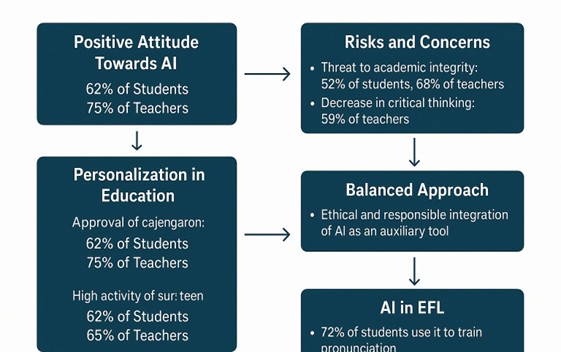
Figure 2 – The impact of AI on Education
Discussion
The data obtained provides a comprehensive analysis of the perception and actual application of artificial intelligence in the academic environment. The study confirms that a positive attitude towards AI prevails among both students and teachers, reflecting the general trends of digitalization of education at the global level. At the same time, the identified advantages and limitations indicate the complex and multidimensional nature of technology integration into existing educational practices.
The key conclusion is that the use of AI significantly contributes to increasing the degree of personalization of the educational process, as evidenced by the high level of approval among both groups of respondents: 62% of students and 75% of teachers. These indicators correspond to current scientific papers that emphasize the ability of adaptive platforms to take into account the individual characteristics of students, their personal learning rate and preferred learning styles. Such personalization stimulates the growth of internal motivation, ensures deeper involvement of students and promotes the formation of autonomous learning skills that are critically important in the modern world.
At the same time, the survey results indicate that the introduction of AI raises a number of serious concerns. The most significant risk is threat to academic integrity, noted by 52\% of students and 68\% of teachers. The increasing use of AI to automatically complete tasks, generate texts, and solve exercises can potentially distort the objective assessment of students’ actual knowledge and acquired competencies. This fact confirms the urgent need to develop innovative assessment systems capable of taking into account the capabilities of artificial intelligence, as well as the importance of forming a stable culture of academic responsibility among students.
In addition, teachers expressed concerns about a decrease in critical thinking (59%) and the risk of passive assimilation of information, which is consistent with theoretical assumptions that excessive automation of mental activity can lead to superficial learning of educational material. This sets teachers the task of revising methodological approaches with an emphasis on tasks that require complex analysis, information synthesis, argumentation, and creative problem solving — that is, those activities where the role of AI remains limited.
The results concerning the use of AI in teaching English as a foreign language (EFL) deserve special attention. The study clearly demonstrated the high activity of using AI to develop conversational skills: 72% of students use it to train pronunciation, and 65% use it to maintain dialogues. These data show that AI opens up new opportunities to overcome the language barrier, especially in an educational environment with limited access to natural native speakers. EFL teachers confirm the increase in students’ confidence (the average score increased from 3.8 to 4.3) and the improvement in pronunciation quality (from 3.4 to 4.1), which clearly indicates the effectiveness of AI as a simulator for the formation of automated speech skills.
However, despite its considerable potential, AI cannot be considered as the full equivalent of live communication. Although AI effectively simulates speech situations and provides a psychologically comfortable training environment, it is unable to fully reproduce the emotional, non-verbal, and culturally specific aspects of communication that are an integral part of real-world interaction. Moreover, there is a risk that excessive reliance on AI may cause «speech patterns» and reduce students’ communicative flexibility in unpredictable situations.
A general analysis of the data obtained leads to the conclusion that the successful integration of AI into the educational process requires a carefully balanced approach. AI should be perceived not as the main element of the curriculum, but as an auxiliary tool that expands the capabilities of teachers and students. Effective practical use of AI should be harmoniously combined with traditional methods in order to maintain pedagogical depth, ensure interpersonal interaction and ensure the development of key cognitive skills. Thus, the results confirm the complex and multilevel nature of the impact of AI on education. Although most participants demonstrate a positive attitude towards technology, it is necessary to take into account potential risks and design educational programs in such a way as to maximize the strengths of AI while neutralizing potential threats. Effective and responsible use of AI is possible only with the active participation of teachers, their willingness to adapt methods and maintaining a critical view of the technologies being implemented. Only with this approach can AI become not just a digital tool, but a powerful incentive for developing new pedagogical strategies and improving the overall quality of learning.
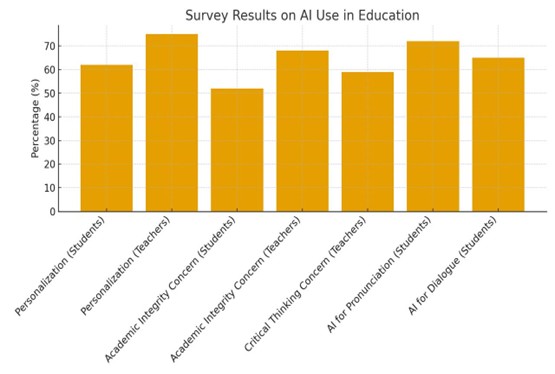
Figure 3 – Survey results on AI Use in Education
Conclusion
The study made it possible to comprehensively assess the role and impact of artificial intelligence in the modern educational system, analyze how these technologies are perceived by students and teachers, and determine the degree of effectiveness of AI in the context of developing conversational skills in teaching English as a foreign language. The empirical data obtained confirms that AI has firmly established itself as one of the most sought-after and promising tools, having a significant impact on the quality, accessibility and level of personalization of learning.
The analysis of the identified advantages showed that artificial intelligence contributes to the expansion of educational opportunities due to its adaptability, high speed of information processing and the ability to provide individualized feedback. The students highly appreciated the convenience, motivational capabilities and interactivity of the AI tools, while the teachers noted a reduction in labor costs associated with routine administrative tasks and an overall increase in the efficiency of preparing educational materials. A particularly significant conclusion is that AI stimulates the development of students’ independence, contributing to the formation of self-regulation and self-learning skills, which is a key requirement of modern educational standards.
At the same time, significant limitations have been discovered that cannot be ignored with the further scaling of AI technologies. Teachers’ concerns about academic integrity, the risk of reducing critical thinking, and the possibility of excessive dependence on technology make it necessary to develop new pedagogical models and assessment tools that can ensure a healthy balance between digital and traditional approaches. In addition, the identified problems related to unequal access to advanced technologies emphasize the importance of systemic efforts aimed at ensuring equal educational opportunities for all participants in the process.
References
- Bai, H., & Chen, W. (2023). Artificial intelligence in language education: Asystematic review. Computer Assisted Language Learning.
- Chen, X., Zou, D., & Xie, H. (2020). Fifty years of research on technology in language teaching and learning: A scientometric review. Computer Assisted Language Learning.
- Dwivedi, Y. K., Hughes, L., & Whalley, J. (2021). Artificial intelligence in education: Challenges and opportunities. International Journal of Information Management.
- Gong, Y., Gao, X., & Lyu, B. (2020). Teaching English in the age of artificial intelligence: What to expect? Computer Assisted Language Learning.