
Elshibek Akbota Aslankyzy
4th-year student, Kazakh Ablai Khan University of International Relations and World Languages, Almaty, Kazakhstan
Scientific supervisor: Sembaeva Zhanagul Kostanaykyzy
Kazakh Ablai Khan University of International Relations and World Languages, Almaty, Kazakhstan
Abstract. This scientific article provides a detailed analysis of the role of artificial intelligence (AI) technologies in the modern educational environment and explores its multidimensional impact on key components of the educational process: teaching, knowledge acquisition and interpersonal interaction between subjects of educational activity. The paper provides in-depth consideration of both the undeniable advantages, such as customization and optimization, and the serious risks associated with digitalization, including changing the traditional role of a teacher. The central purpose of the study is to determine how AI technologies contribute to the creation of personalized educational trajectories, increase the productivity of learning materials and the formation of necessary digital literacy among students in the 21st century.
In addition, technology contributes to the creation of adaptive learning trajectories, helps identify knowledge gaps in real time, increases access to education for people with special needs, and allows educational institutions to manage learning processes more effectively. In the review, we will look at the key areas of AI application in education and provide examples of services and successful practices that are already working today.
Keywords: Artificial intelligence in education, digitalization, adaptive learning, neural networks, online survey, academic ethics, transformation of the teacher’s role.
INTRODUCTION
Artificial intelligence and modern technologies are already actively used in medicine, charitable initiatives, environmental projects and other areas, to which digitalization makes an important contribution. They have not bypassed education either. Today, neural networks help to reduce the routine burden on teachers and teachers, make learning more personalized, dynamic and interesting for students, simplify the development of new professions and even provide emotional support to students.
Another time — consuming task in the educational process is the preparation of surveys and test tasks to test knowledge. And here, artificial intelligence-based tools also come to the rescue.
For example, the PrepAI test creation platform allows you to create control papers based on any of your materials — be it notes, textbooks, or video lectures. You can also simply specify a topic, and the service will compile a test based on data from open sources. The neural network analyzes the content, highlights key fragments, and forms multiple-choice questions. PrepAI is suitable for both school courses and higher education programs.
Another example of educational content automation is the Smartest Learning service. It is able to process uploaded text files and automatically create presentations with visual materials, as well as quizzes and tests based on them. All received educational materials can be saved in your personal library and edited if necessary.
The empirical basis of the research is an online survey conducted among a wide sample of students and teachers of higher education institutions. The results obtained indicate a predominantly positive attitude of respondents towards the introduction of AI, while noting its ability to significantly facilitate and make the educational process more accessible. At the same time, a number of critical problems were identified: a decrease in the level of independent work of students, the threat of increased academic dishonesty (plagiarism) and the risk of insufficient development of critical analysis skills when using automatically generated solutions.
The emphasis is placed on the fact that artificial intelligence should be perceived solely as a powerful pedagogical tool and assistant, and not as a potential replacement for a qualified teacher. The author’s key conclusion is that successful, ethical and effective integration of AI into educational practice is possible only if a comprehensive digital culture is formed, a high degree of responsibility and strict adherence to ethical principles of working with the latest intellectual technologies by all participants in the process.
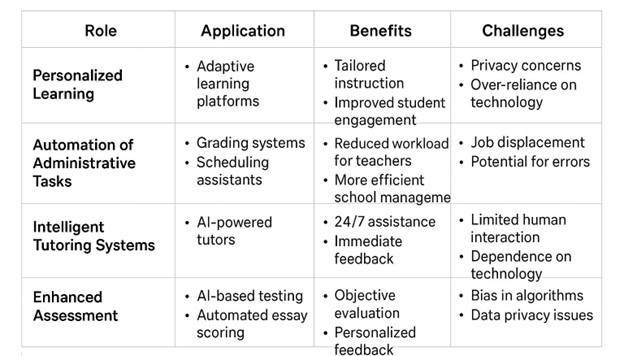
Figure 1 – The Role of Artificial Intelligence in Education
METHODS
Modern society is at the peak of the fourth industrial revolution, characterized by the unprecedented speed of the introduction of artificial intelligence (AI) technologies in all spheres of human activity, from industry and medicine to management and, of course, education. The educational system is one of the most dynamically transforming areas where the potential of AI is particularly pronounced and multifaceted. The use of intelligent systems not only facilitates access to huge amounts of information, but also creates completely new conditions for the in-depth individualization of the educational process, stimulating internal motivation of students and radically optimizing administrative and pedagogical work.
In recent years, the rapid spread of artificial intelligence in all areas of human activity has been increasingly discussed, and education is no exception. As part of this research, it is important to understand what this technology is and how it can transform the learning system and influence the development of society as a whole.
In a simplified form, neural networks can be described as a complex mathematical model — a computing system capable of performing intelligent tasks and making meaningful predictions. By analyzing huge amounts of data, such algorithms generate the most accurate and logical answers. One of the key advantages of neural networks is their ability to self-learn: models are improved based on new data and do not require constant programmer involvement, which is the essence of machine Learning.
Today, artificial intelligence is being actively introduced into the educational environment. It is used to automatically check exam papers, analyze homework, evaluate typical errors, and even identify knowledge gaps. Thanks to intelligent algorithms, the system can select the optimal learning materials for each student, helping them to better understand complex topics and improve their own academic performance. Based on data on the student’s progress, AI adjusts the individual learning plan, offering personalized recommendations and maintaining a steady pace of development — all under conditions of objective, devoid of emotional control.
In addition, modern AI platforms allow you to create adaptive courses, create virtual assistant models that can answer students’ questions 24/7, and predict educational outcomes based on statistical patterns. Such technologies help not only to improve the quality of education, but also to develop students’ skills in independent work, critical thinking and digital literacy — competencies that are extremely important for future professional success in a high-tech society.
Artificial intelligence in education is implemented through a variety of innovative solutions: from adaptive learning platforms that automatically adjust the complexity and pace of the material to the needs of a particular student, to automated verification systems for voluminous written papers and intelligent assistants capable of advising students 24/7. A special place is occupied by large language models (LLM), such as ChatGPT, which, being a powerful generative tool, open up enormous opportunities for creativity and research, as well as serious issues of ethics, content authenticity, and preserving the unique role of humans in the transmission and understanding of knowledge.
The purpose of this article is to conduct a comprehensive analysis of the advantages and disadvantages of using AI in the educational process at the higher school level, as well as to present and interpret the results of an empirical online survey that reflects the current attitude and degree of involvement of students and teachers in the use of these technologies. This study aims not only to establish the fact of digitalization, but also to identify the key challenges facing the academic community in the context of widespread integration of intelligent systems.
The introduction of AI inevitably entails the need to review traditional approaches to learning and assessment. Among the emerging new challenges are the risk of reducing the depth of independent thinking, the danger of increasing academic dishonesty (plagiarism and passing off other people’s AI-generated solutions as their own) and the urgent need to form clear ethical standards for the use of technology. The most important aspect remains the preservation and rethinking of the role of the teacher as a key mentor, motivator, facilitator and critical analyst, whose task is not only to convey information, but also to direct the educational process towards the formation of a holistic and responsible personality of the student.
To achieve these goals and study the multifaceted impact of AI on the educational environment, a quantitative research method was chosen, implemented through a large-scale online survey. This approach made it possible to quickly collect and analyze information about the perception of AI by a wide range of participants in the educational process and objectively identify statistically significant trends and patterns in their responses, opinions, and behavioral patterns.
Study participants
The survey was conducted in October 2025 and included 120 respondents, who were divided into two key groups for comparative analysis.:
- Students: 80 people representing various faculties (technical, humanitarian, economic) of higher educational institutions.
- Teachers: 40 people working in higher educational institutions of Almaty and several other regions of the Republic of Kazakhstan.
The age range of the participants ranged from 18 to 50 years old. The students were dominated by a young audience aged 18-24, reflecting their high digital adaptability. The group of teachers consisted mainly of people aged 30-50.
The procedure for conducting
The survey campaign was implemented using the Google Forms platform, which provided a high degree of convenience, anonymity and speed of data collection. A direct link was sent to the respondents, accompanied by a brief but comprehensive explanation of the research objectives and detailed instructions on how to complete the questionnaire. Prior to the start of participation, all respondents necessarily gave informed consent to the use of their answers exclusively for scientific and research purposes, which guaranteed compliance with ethical standards.
The developed questionnaire included 10 basic, clearly formulated questions with closed (multiple choice, Likert scale) and semi-open answer options, which were logically grouped into four thematic blocks:
- General and demographic information: Identification of the role (student/teacher), age, level of education.
- Practical use of AI: Questions about the frequency of use of AI tools, specific types of technologies used (for example, ChatGPT, Grammarly, Google Translate, adaptive educational platforms) and the purpose of their use.
- Perception of benefits: Evaluation of aspects such as improving the effectiveness of training, the possibility of customization, saving time and increasing the availability of resources.
- Perception of risks and challenges: Questions aimed at identifying concerns related to plagiarism, decreased critical thinking, loss of intrinsic motivation, and degradation of personal interaction.
Data processing methods
The collected data set has been carefully processed using descriptive statistics. As part of the analysis, absolute and relative response rates were calculated, percentages were plotted to visually present the results, and the most dominant and popular trends in respondents’ opinions were identified. In addition, a detailed comparative analysis was conducted between groups of students and teachers in order to clearly identify existing differences in the perception of AI and its strategic role in the educational process.
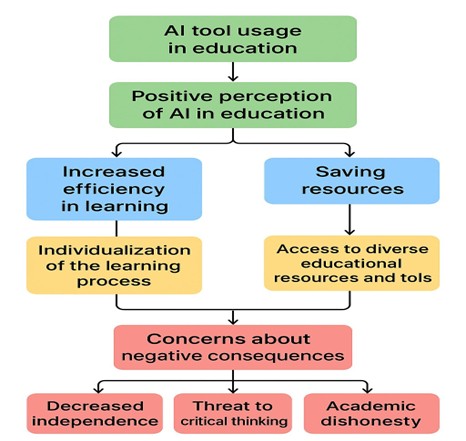
Figure 2 – The Impact of AI on Education – Benefits and Concerns
RESULTS
The analysis of empirical data obtained during the online survey indisputably demonstrates that the use of artificial intelligence (AI) technologies in educational activities has become widespread and widespread in both student and teaching environments.
AI usage statistics
- Overall level of implementation: An impressive 75% of the study participants confirmed that they are already actively using various AI tools in their educational or teaching practice.
- Popularity rating of tools: Among the most frequently mentioned intelligent assistants are the leaders:
o ChatGPT (65%): Used to generate ideas, structure texts, and search for information.
o Grammarly (50%): Used to correct grammar and style.
o Google Translate (40%): Used as a fast translator and language support tool.
o Adaptive platforms (35%): Include specialized user-configurable learning systems.
- Differences in goals: Students primarily use AI for practical assistance (preparing reports, searching for materials, doing homework). Teachers, on the other hand, focus on automating routine and administrative tasks (writing and checking tests, analyzing papers).
Perception of the benefits of AI
The study participants overwhelmingly positively assessed the potential of AI, seeing it as a powerful factor in improving the learning process.:
- Increased efficiency: 80% of respondents absolutely or partially agreed with the statement that AI significantly facilitates the learning process and significantly increases the efficiency of learning educational material.
- Saving resources: 70% of students emphasized that using AI allows them to significantly save time on completing tasks and better structure the information they receive.
- Pedagogical advantages: The teachers highlighted the unique opportunity of individualizing learning and the ability of AI to create personalized, adaptive training programs for each individual student as the main advantage.
The most frequently mentioned advantages (TOP 3) are:
- Deep individualization and adaptation of the learning process.
- Increase interest and intrinsic motivation in learning.
- Providing instant access to modern, diverse educational resources and tools.
Along with optimism, the participants expressed serious concern about the potential negative consequences.:
- Decreased independence: 60% of the participants expressed reasonable concern about the excessive dependence of students on AI, which can lead to a decrease in independence in solving complex tasks.
- Threat to critical thinking: 55% of teachers highlighted the risk of so-called «surface learning», when students rely entirely on ready-made AI solutions, thereby not developing their own critical analysis and information synthesis skills.
- Academic dishonesty: 45% of respondents indicated an increase in academic dishonesty (plagiarism) as one of the most likely risks.
- Social aspect: 35% are concerned about a decrease in the quality and frequency of personal interaction between a student and a teacher, which is critical for the formation of soft skills.
Assessment of the possibility of teacher replacement
- Opinion on a complete replacement: Only a small minority (15%) of respondents admitted that AI in the distant future will be able to completely replace a qualified teacher.
- Consensus on the role: The overwhelming majority (85%) are convinced that AI should remain an additional tool and assistant, and not a substitute for a human teacher.
The general conclusion from the results is that the respondents demonstrate a balanced and pragmatic approach to AI: they highly appreciate its potential to improve educational activities, but at the same time they are clearly aware and articulate the potential risks. The general consensus is that AI can significantly improve the quality of the learning process only if it is used responsibly and in a controlled manner in close collaboration with the teacher.
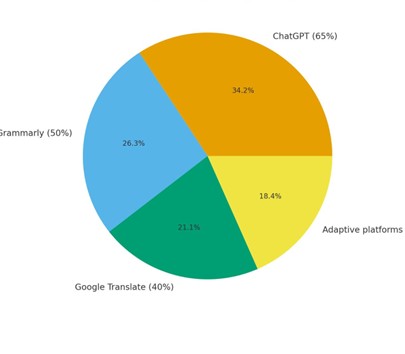
Figure 3 – AI Tool usage among participants
DISCUSSION
The results of the conducted research convincingly confirm that artificial intelligence (AI) technologies are confidently integrated into the modern educational process, which is an inevitable consequence of global digitalization trends. The positive assessment of AI by the majority of respondents reflects its practical value in improving efficiency, accelerating access to knowledge and, most importantly, in providing unprecedented individualization of training programs. These data are fully consistent with the findings of international research, which also highlight the ability of AI to adapt materials to each student’s unique learning styles and pace.
However, the study has identified a number of critically important risks that require immediate attention from the academic community. The main danger lies in the formation of excessive dependence on intellectual tools, which can lead to atrophy of critical thinking and independent problem-solving skills. The particular concern of teachers about the growth of academic dishonesty (the use of AI to generate finished papers) strongly indicates the need for urgent development of new assessment methods and, above all, the formation of proactive digital ethics and responsibility among students.
An interesting and important aspect is the dichotomy of AI perception between student and faculty groups. Students tend to view AI as a utilitarian tool designed to speed up and facilitate learning tasks. At the same time, teachers evaluate it from a broader pedagogical and strategic point of view, emphasizing the need to preserve the educational value of the learning process itself. This contrast of opinions should not be considered as a conflict.; On the contrary, he emphasizes the importance of an integrated and balanced approach to the implementation of AI: technology should serve as a catalyst for improving the quality of education, rather than its substitute, complementing and strengthening key aspects of pedagogical activity.
Thus, the discussion of the results leads to a fundamental conclusion: artificial intelligence has the potential to dramatically improve the educational process, but its successful application requires a careful balance between technological automation and human, pedagogical control.
To ensure successful, ethical and effective integration of AI, the following steps must be taken:
- Development and implementation of innovative methods for integrating AI directly into training programs.
- Purposeful training of students in key skills of critical thinking, media literacy and digital literacy in the context of using generative models.
- Creation and strict observance of generally accepted standards of ethical and responsible use of intellectual technologies in the academic environment.
In general, these studies clearly demonstrate that AI is not intended to replace a teacher, but is an exceptionally powerful but manageable tool that promotes deep personalization of learning, significantly increases the effectiveness of knowledge acquisition and plays a key role in shaping the necessary digital culture in the educational environment.
The digital environment is an endless stream of data, which is increasingly difficult for a person to process and systematize. Therefore, it is logical to entrust some of this work to technology. Neural networks can greatly facilitate the routine tasks of teachers: checking tests, term papers, and extensive homework. Their ability to find factual, logical, and spelling errors, analyze test assignments, and even solve complex mathematical problems makes AI a powerful auxiliary tool in the educational field.
In addition, technology can help solve another important task of modern education — career guidance. It includes not only the choice of a future specialty, but also support in self-determination and preparation for a future career. Artificial intelligence analyzes the answers to various questions, building logical connections, and forms a detailed profile of the student’s interests and inclinations.
The principle of operation of such systems is as follows: a team of Russian expert developers has created a set of tests in various areas. Students take these tests, and their results become input data for the neural network. The questions are carefully selected and meet professional criteria, reflecting the student’s level of competence and awareness. After processing the information, the machine learning model generates a conclusion — a list of areas and areas in which the test participant should develop further.
CONCLUSION
The conducted research has definitively established that artificial intelligence (AI) has taken a significant and constantly growing role in the modern educational process. Its impact ranges from improving the overall effectiveness of learning and unprecedented individualization of curricula to providing expanded access to the most relevant educational resources. The results of the empirical survey convincingly showed that the vast majority of students and teachers positively perceive AI, recognizing its value as a useful and facilitating tool for learning and teaching.
Nevertheless, the potential risks identified — reduced independence, the danger of excessive dependence on automated solutions, and the inevitable increase in academic dishonesty — serve as a stark reminder of the need to proactively develop digital ethics, cultivate critical thinking skills, and instill personal responsibility for one’s own learning.
The main, undeniable conclusion of the study is that AI not only cannot, but should not seek to replace a qualified teacher. Its true function is the role of a high -tech assistant that complements, enhances and radically facilitates teaching activities, freeing the teacher from routine tasks and contributing to the deep personalization of learning. For the successful, long-term and ethical integration of AI into the educational process, it is vital to ensure the perfect combination of advanced technological capabilities with the highest professional competence of teachers, solid ethical principles and fundamental educational values.
REFERENCES
- Bostrom, N. (2022). Superintelligence: Paths, Dangers, Strategies. Oxford University Press.
- Selwyn, N. (2020). Should Robots Replace Teachers? AI and the Future of Education. Polity Press.
- (2024). Artificial Intelligence in Education: Challenges and Opportunities. UNESCO Publishing.
- Anderson, J., & Rainie, L. (2021). Artificial Intelligence and the Future of Humans. Pew Research Center.
- Luckin, R., Holmes, W., Griffiths, M., & Forcier, L. (2023). Intelligence Unleashed: An Argument for AI in Education.